Making Photographs: The Story Behind Pond, Mount Vision

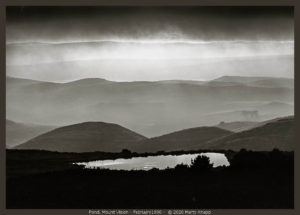
I’ve been thinking about 1990 and remembering what I was doing and photographing during that time some thirty years ago. Writing about the early photographs made on Mount Tamalpais in last week’s post, Light on the Mountain, jogged my memory. I was reminded of photographs I’d made at other places during that time. A film negative that I’ve always loved came to mind: Pond, Mount Vision was photographed on a late February day in 1990. It was recorded quite early in my career, during the 5th year of serious photography. I’ve now been at this pursuit for thirty-five years! The experience of making this photograph embodies much of what I feel about finding my way and finding photographs in the natural, changing light of the landscape.
February1990

Letting Go
In the winter of 1989-90 I haunted the western slopes of the Inverness Ridge trying to get some evocative images of the great landforms of Point Reyes and Drakes Estero. I wandered around the lookouts on Mt Vision road that winter without much luck. But, more importantly, during this time, I began to learn how to let go of my expectations. Instead, I gradually became aware of what was being offered. Sometimes it was a matter of simply turning in another direction or walking away. Paying attention to nothing in particular and letting go, I stopped hunting and relaxed.  It seems simple to me now, but at the time it was a revelation–to become present to a scene bathed in a fleeting moment of revealing light! At unexpected moments, the light from a setting sun could break through the moving fog or clouds.

Such was the case with Pond, Mt. Vision. I could have easily left the ridge because the fog was obscuring what I was so determined to photograph. Instead, I let those thoughts go and quietly watched, then photographed as the surprising light from the setting sun coursed under the fog, piercing the darkness. The light sparkled, reflecting on a still pond. I wrote about this moment in my book, Point Reyes 20 Years:

From the Book
I don’t remember the first time I looked toward the Point from Mount Vision. I just know that, when I see that view now, I’m filled with a deep sense of hope, awe, and tranquility. The views from Mount Vision are etched deeply into my heart.

Over the years, I’ve let the light lead me as I hike. My camera and tripod are comfortable extensions of my body that I hardly notice as I walk. When the good light arrives, I notice it as it breathes life into the shape of a tree, reveals the curve of a hill, or flashes off the surface of water. It’s when this light comes that I remember I am carrying my camera.

As I watched the sunset from Mount Vision one February evening, the sun winked through the Pacific fog to sparkle on a small pond. At the horizon, the curtain of fog opened briefly to reveal a small, shining window to the sea.
Light on the Mountain: The Views from Tamalpais

It felt like I was on top of the world–or looking down from heaven. I remember the first time I visited Mount Tamalpais– its gorgeous west-facing ridges overlooking Bolinas Bay and the Pacific Ocean. The views, especially in the late afternoon, took my breath away. The approaching fog under the setting sun struck me into reverential silence. I felt light, as though I was flying.  My wife, Jean, says Mount Tam is where God comes to rest. I believe she’s right about that.

June 1992

I came here for the first time, thirty years ago, in 1990. It’s a half-hour drive from my home up to West Ridgecrest Boulevard. That’s where you’ll find the fabulous views, beside the undulating roadside. When I got there, I had to pull the car over every hundred yards to check out one spectacular view after another. Soon, I found a few treasured places from which to make photographs. I returned to visit and photograph from those places over the next thirty years. From summer fog through star-splashed midnight skies, I’ll show you the best ones I’ve gathered from memorable moments of light on Mount Tamalpais.
To see the complete series including a number of images not included here go to the Tamalpais Collection

First Photograph – The Flight Stone Circle
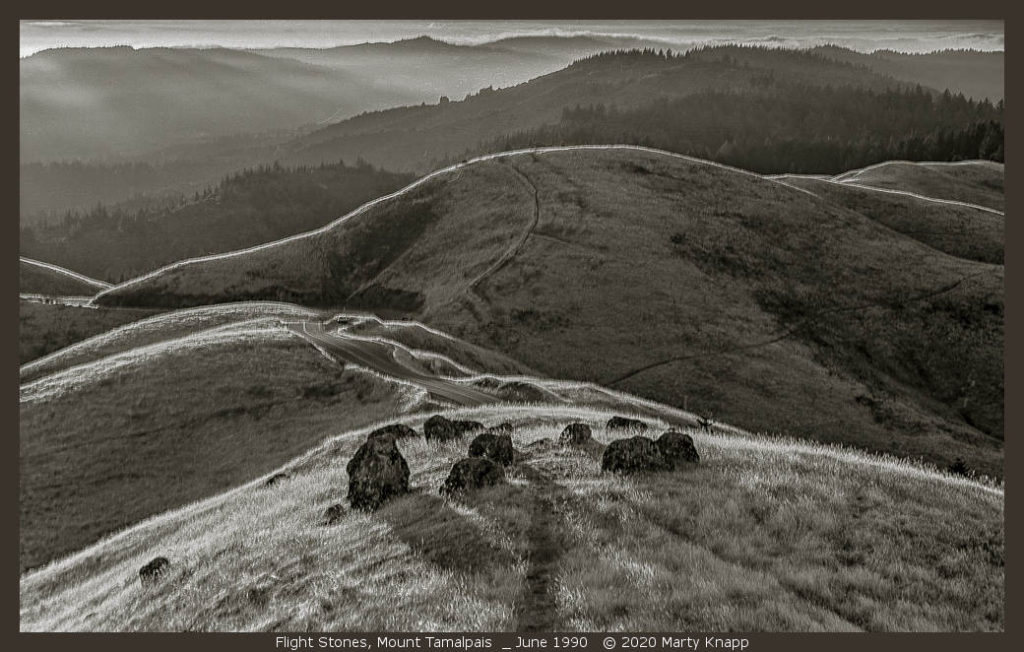
The earliest photograph is one I made in June 1990. I’d heard about a mysterious group of stones the locals call the Flight Stones, aka as the Stone Circle. I was at a lecture given on geomancy the speaker showed a couple of slides of the stones but would not divulge their location. He said, “if you’re meant to find them, they’ll call you.” I went up to Mt.Tam and I guess it was meant to be, because I quickly found the location. My interest in megalithic sites fueled my curiosity as I wondered if this unusual grouping of stones were placed by ancient peoples or a cataclysmic, perhaps volcanic event. The jury is still out on their origin.

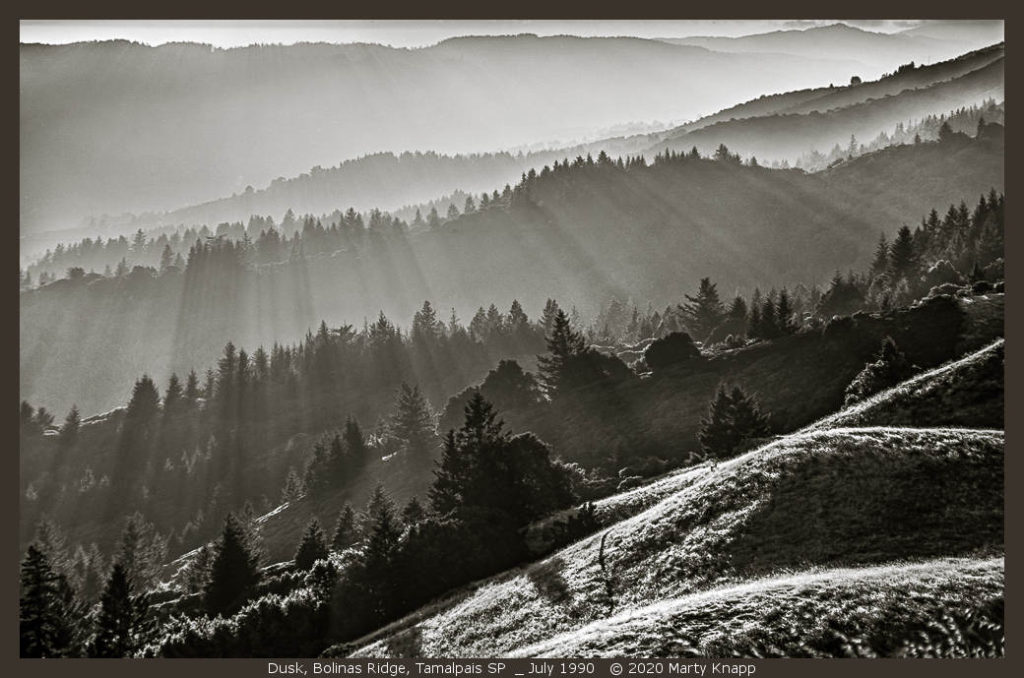
In any case, once up on the mountain I looked around and was amazed to find other vistas that also “called to me.” I was soon drawn to photograph the lovely undulating and sensuous hills and ridge lines, especially in the late afternoon when the sun backlit and accentuated their shapes. In particular, a month after finding the stones, I photographed lovely god rays cascading over the ridges and made Dusk, Bolinas Ridge

July 1990

A Large Format Photograph
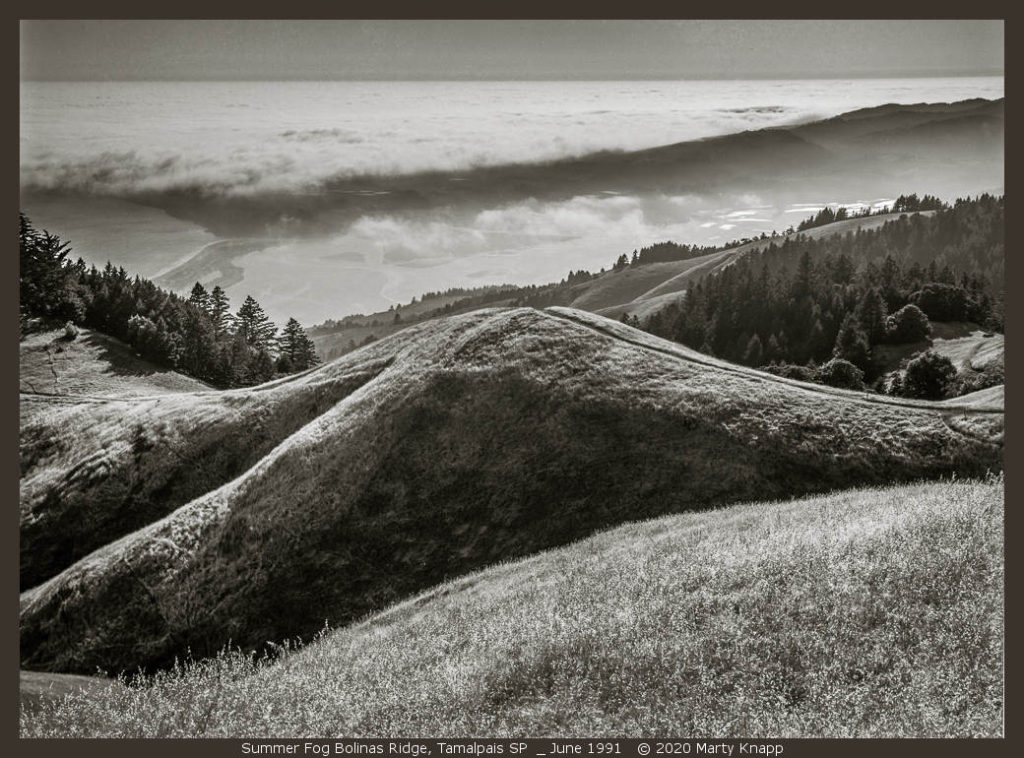
I returned the next summer with a newly acquired 4×5 field camera. I was inspired by the large format work of my hero, Ansel Adams, who used a similar camera to make his photographs. Summer Fog, Bolinas Ridge was made that June from the mountain slopes. I’m glad I made this large format film exposure before I became weary of lugging that heavy camera around the mountain.

Bolinas Ridge Triptych & Summer Solstice
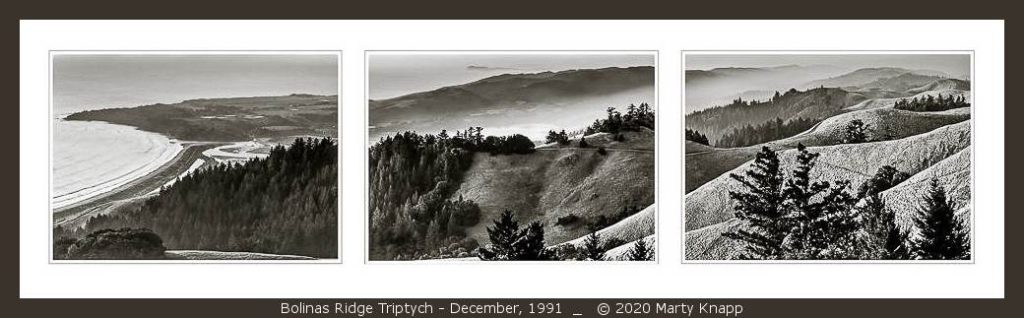
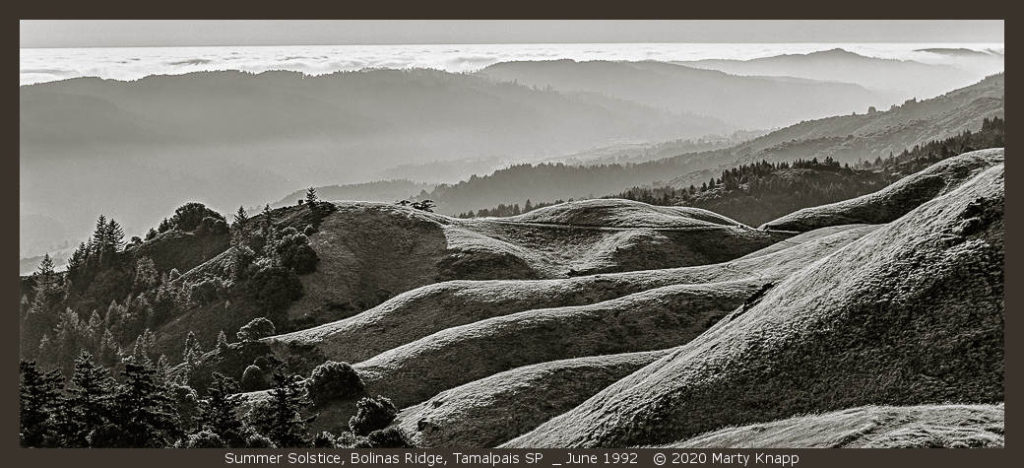
In December 1991. during the winter solstice, I returned to a favorite promontory to make a 3-negative triptych of a broad view from Bolinas Bay to the Inverness Ridge, far to the north. This time I worked with a smaller camera which gave me more agility and the ability to act more spontaneously. The Bolinas Ridge Triptych was possible due to the maximum southern position of the setting sun. I learned that each location on Tam has its own best time of the year (and day!) to create photographs. The next summer, 1992, during the solstice, I made the photograph that tops this essay, Summer Solstice, Bolinas Ridge.

Above the Fog
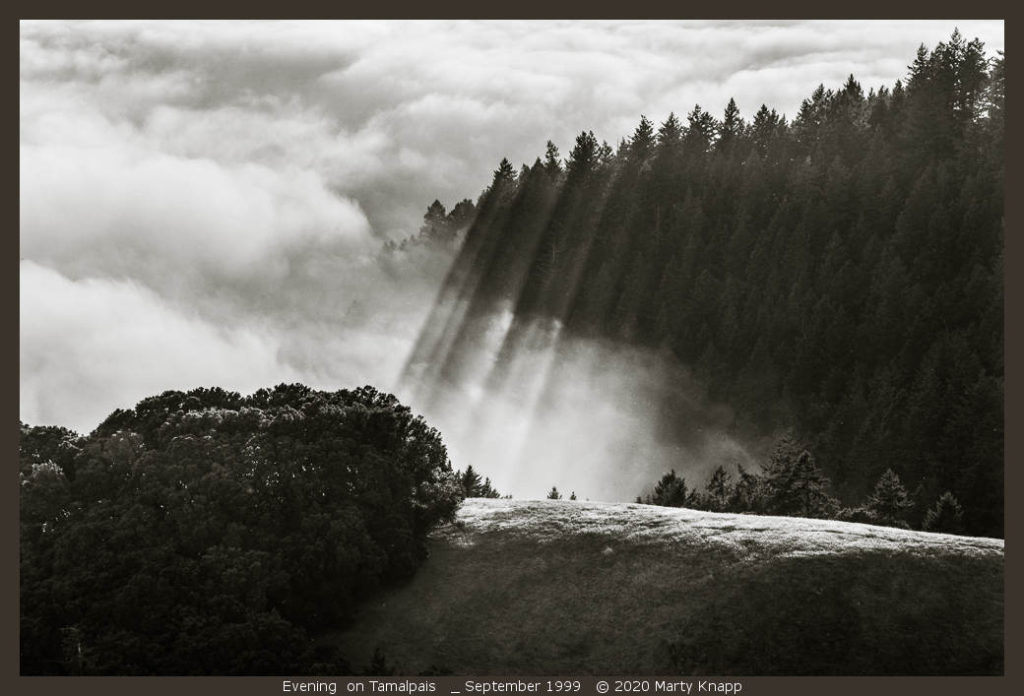
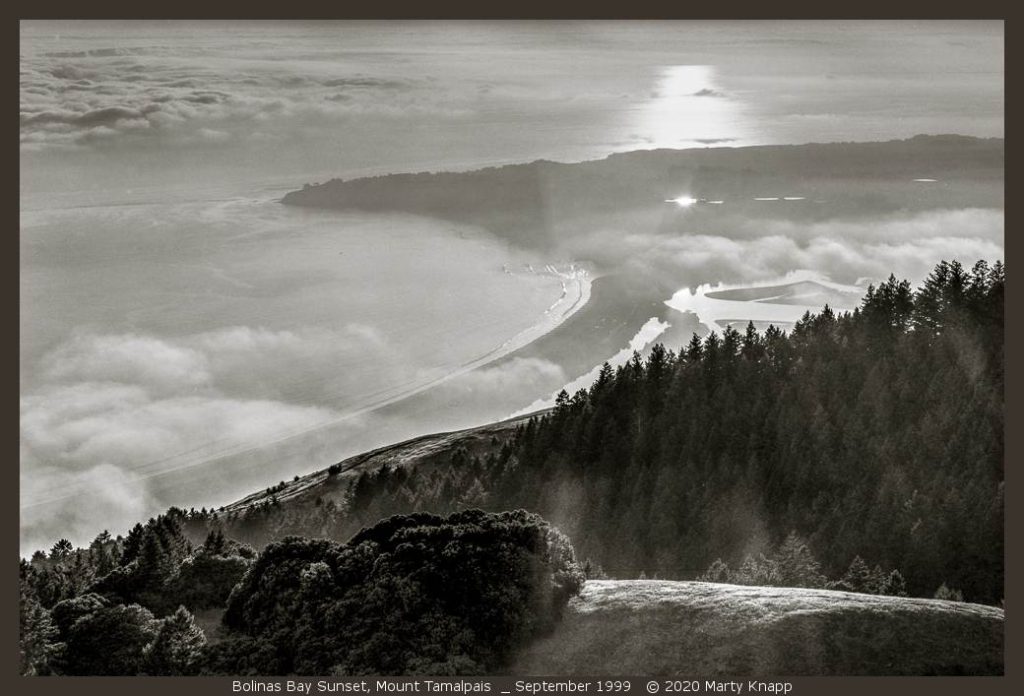
Low-lying fog envelops West Marin county often, creeping in during the late afternoon. It’s a perfect time to go up the mountain and see if the sun is shining above. Jean and I headed up the Bolinas-Fairfax road to take a look on a September afternoon in 1999. What we saw and I photographed is indelibly etched in my memory. From where I had earlier stood to photograph the Bolinas Ridge Triptych, I witnessed a couple of life-time scenes. The first, Evening on Tamalpais, featured a stunning cascade of crepuscular sun rays streaming over the Bolinas Ridge. Obscured by the fog is Bolinas Bay and Stinson Beach. Take a look at this other photograph, Bolinas Bay Sunset, I made a few days later, to see what the fog has covered!

September 1999

September 1999

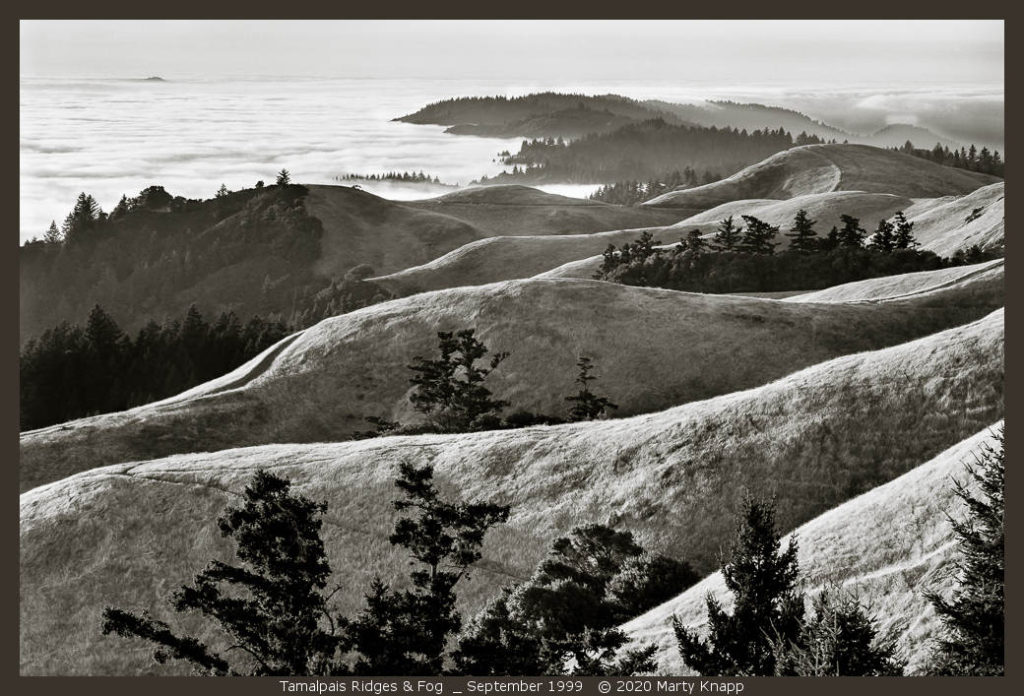
Then, turning the camera more to the north I made a second photograph. Tamalpais Ridges and Fog explores the heavenly beauty of the landforms stretching from Tam to Point Reyes, with a sweet whipped-cream fog creeping from the Pacific into the valleys below.

September 1999

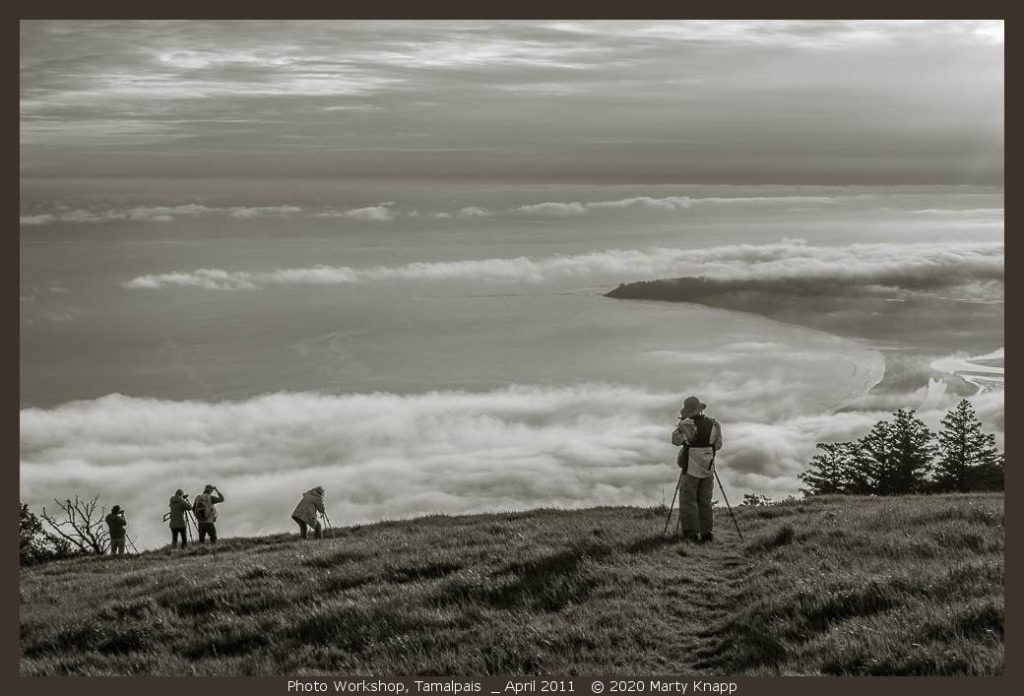
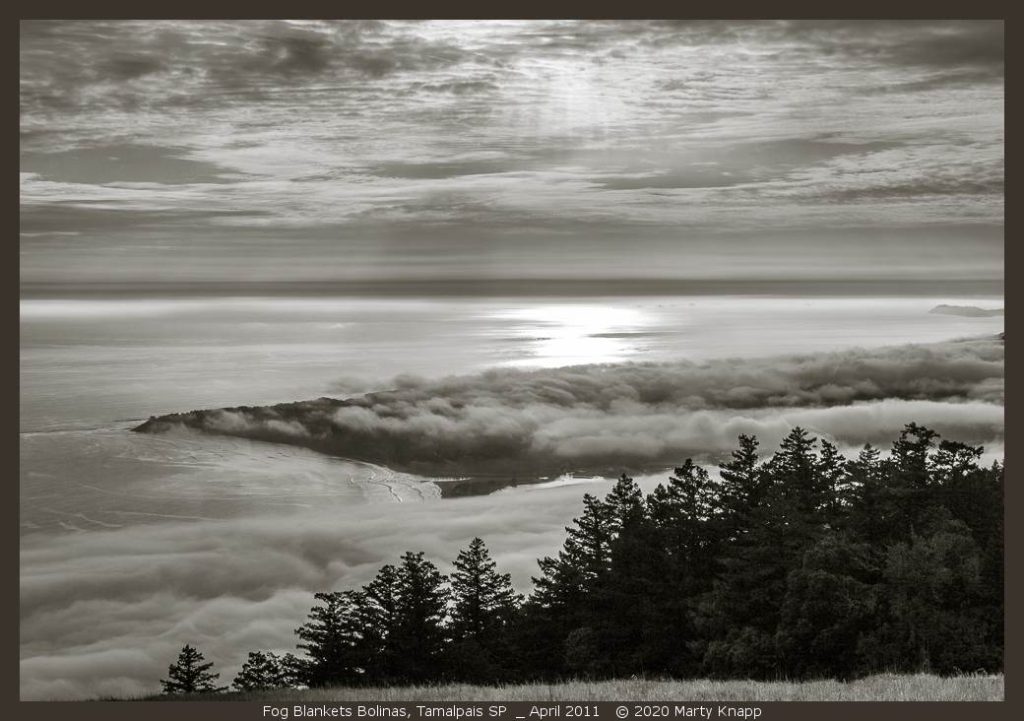
I’ve taken fellow photographers to my favorite locations on Tamalpais during workshops and coaching sessions. In April, 2011 a small group of us got to photograph the light at the end of a beautiful day. Here we are working and here is what I shot before leaving the mountain.

April 2011

April 2011

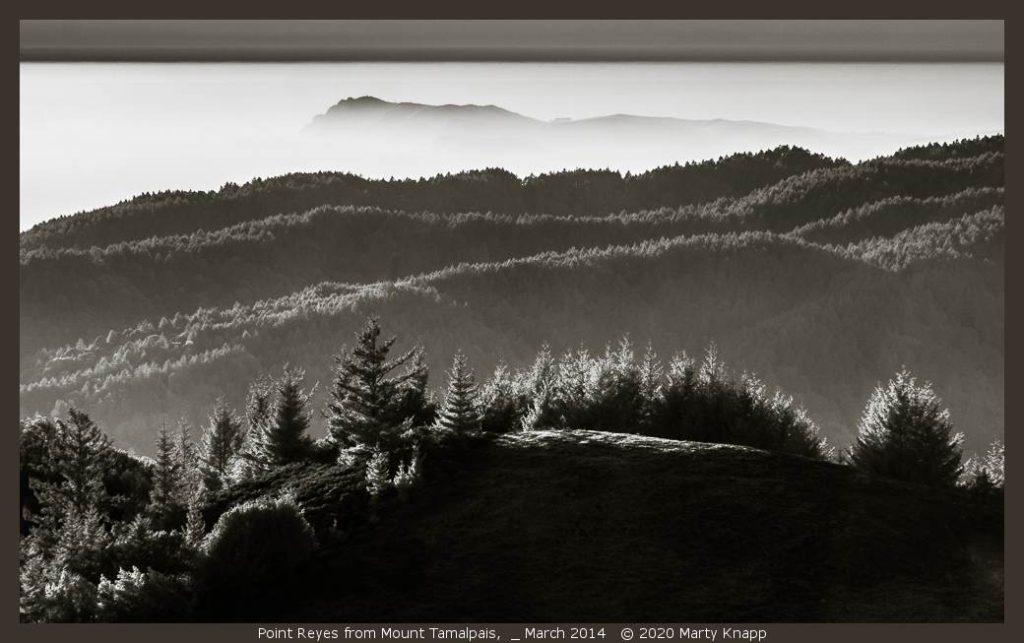
It’s true you can see the Point of Point Reyes. As night falls you can even see the light from the lighthouse if it’s clear enough. Taken with a telephoto lens, this image shows the highlands of Point Reyes emerging from the fog.

March 2014

Starry Nights
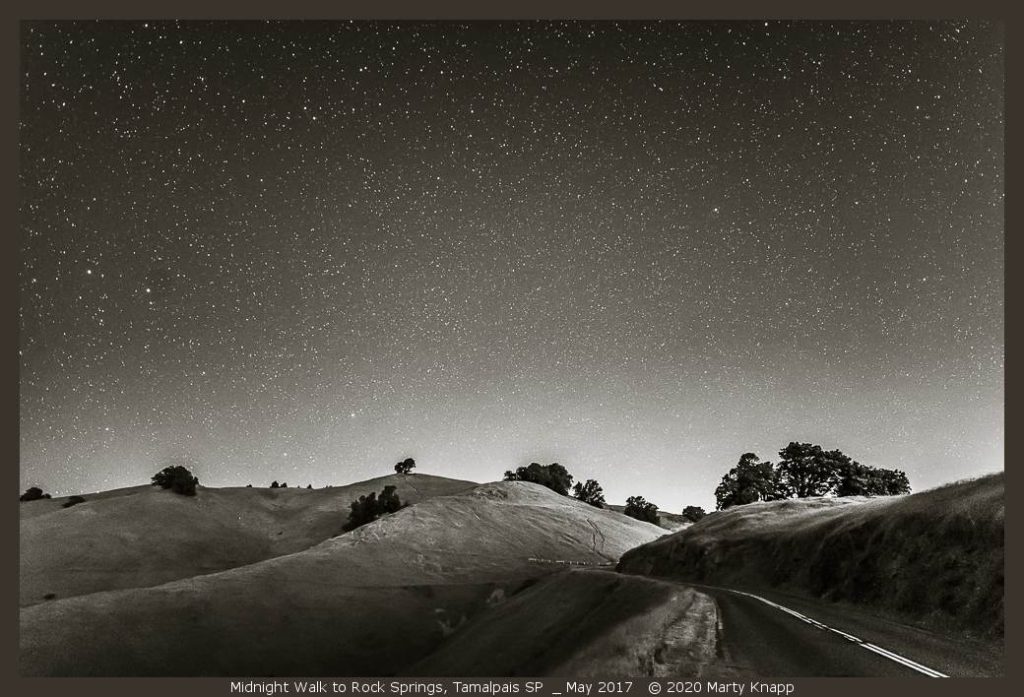
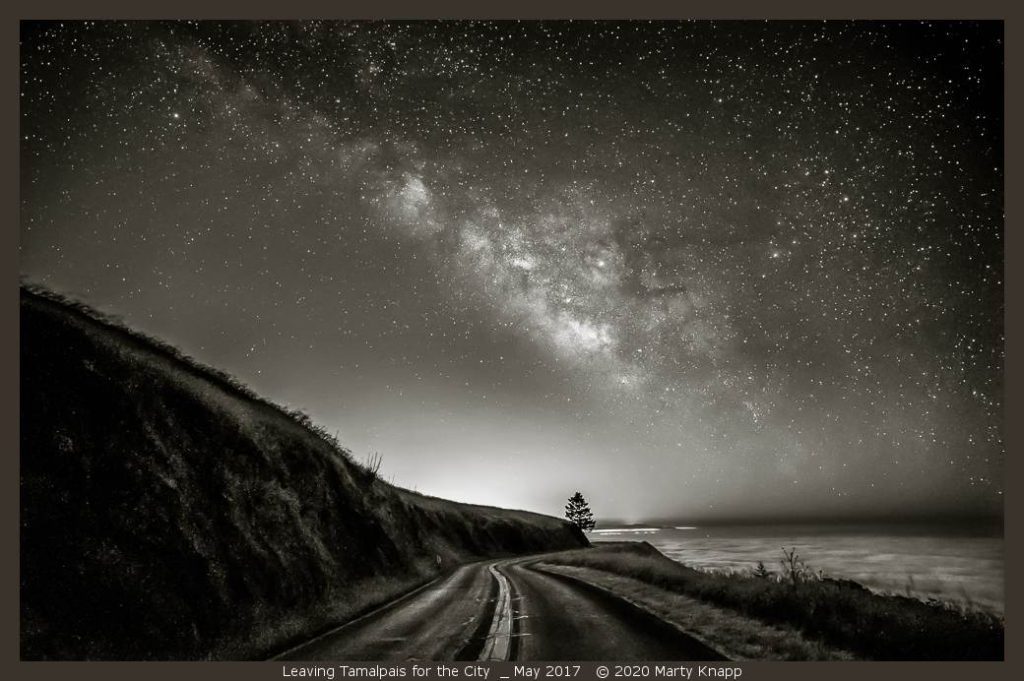
It’s fitting that my most recent work comes from two walks I made under starry skies on Mount Tamalpais. In the summer of 2017, I ventured along the abandoned roads to make Midnight Walk to Rock Springs and Leaving Tamalpais for the City. I hope you enjoyed these stellar views. Be sure to visit the entire collection where you’ll find a number of photographs not mentioned in this essay.

May 2017

May 2017

Discovering the Alabama Hills

I’ve been coming to and photographing in the Alabama Hills for 20 years. I first heard about the wonders there from a friend, fellow photographer, Jan Watson. Jan had noted my fascination with rock photography and was surprised to learn that I had not ever been to nor had even heard of the Alabama Hills! She extolled the fantastic, other-worldly landscape I would find there and urged me to travel there to see these wonders for myself.


To help me visualize what I might see, Jan told me that many early TV westerns of the “Cowboys and Indians” kind, were filmed on location there. When I heard that the Lone Ranger and Hopalong Cassidy episodes were shot there, I had envisioned horsemen heroes galloping between giant boulders, the scene backdropped by majestic snow-capped mountains. No wonder, for I had been captivated by such exciting scenes as a child, dreaming in front of a small TV in my Connecticut home.

I filed Jan’s suggestion and looked forward to a time when I could visit the Alabama Hills to see the landscape there in person. In the meantime, I continued photographing the rocks and stones I found near my northern California home. For a while, I mused if some of the rocks I found were parts of long lost megalithic sites– ancient ceremonial places created by the ancients for reasons that elude us today? The stone circle on Mount Tamalpais and the stone wall up on the Pierce Point highlands are a couple of places that attracted me, but I digress….

In November of 2000 I travelled with my friend, Tom Morse, to photograph the dunes at Death Valley. In Tom’s motorhome, we drove over the Sierra range down to Mono Lake and south along Hwy 395 as darkness fell. It was quite late when we drove through the small town of Lone Pine. At the only traffic signal in town, Tom turned the motorhome to the west up the Whitney Portal Road. He seemed to know what he was looking for, but said nothing. In a few miles he turned right onto a dirt road and amazingly, we soon pulled into a small canyon and prepared to turn in for the night. I had no idea of where we were. You couldn’t see anything but vague shapes under a dark sky full of stars. Tom said that at sunrise we would be treated to a splendid site. It was a kind of surprise he was giving me.

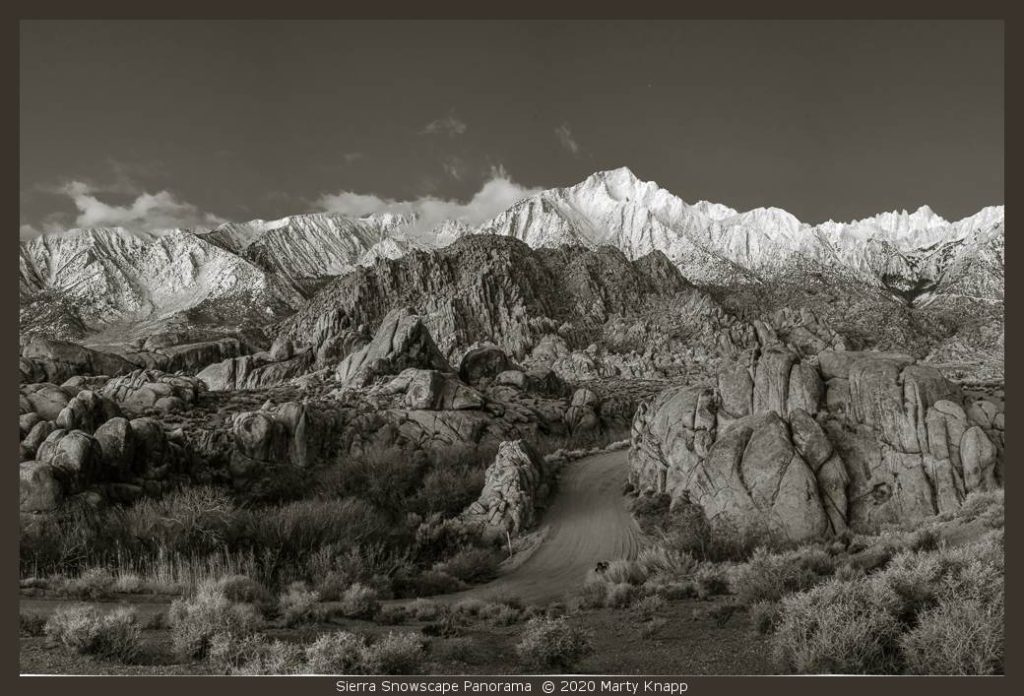
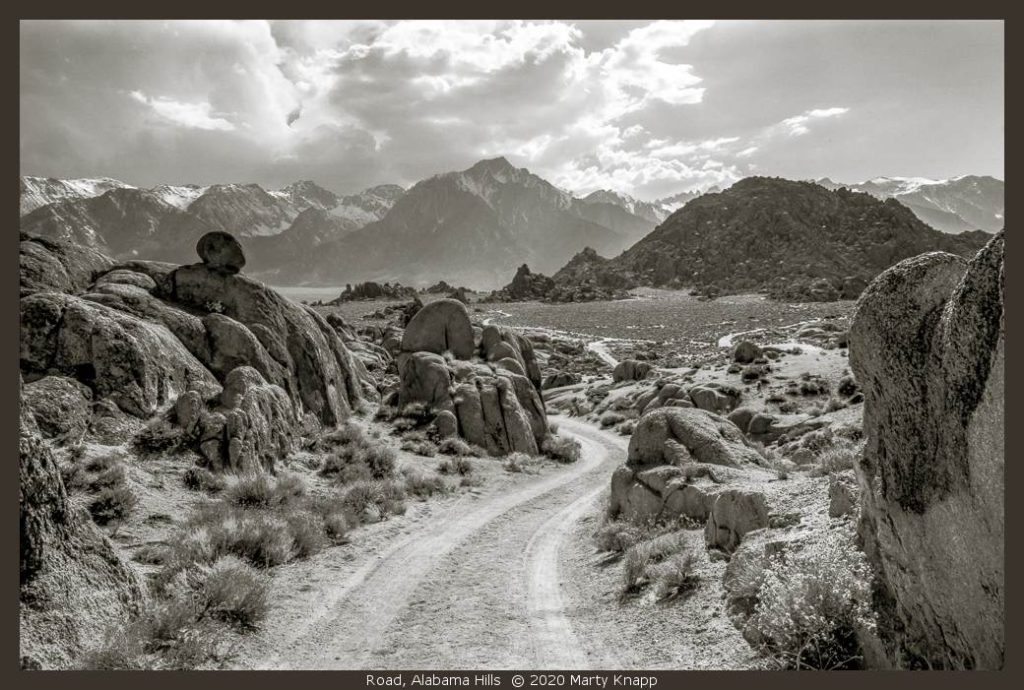
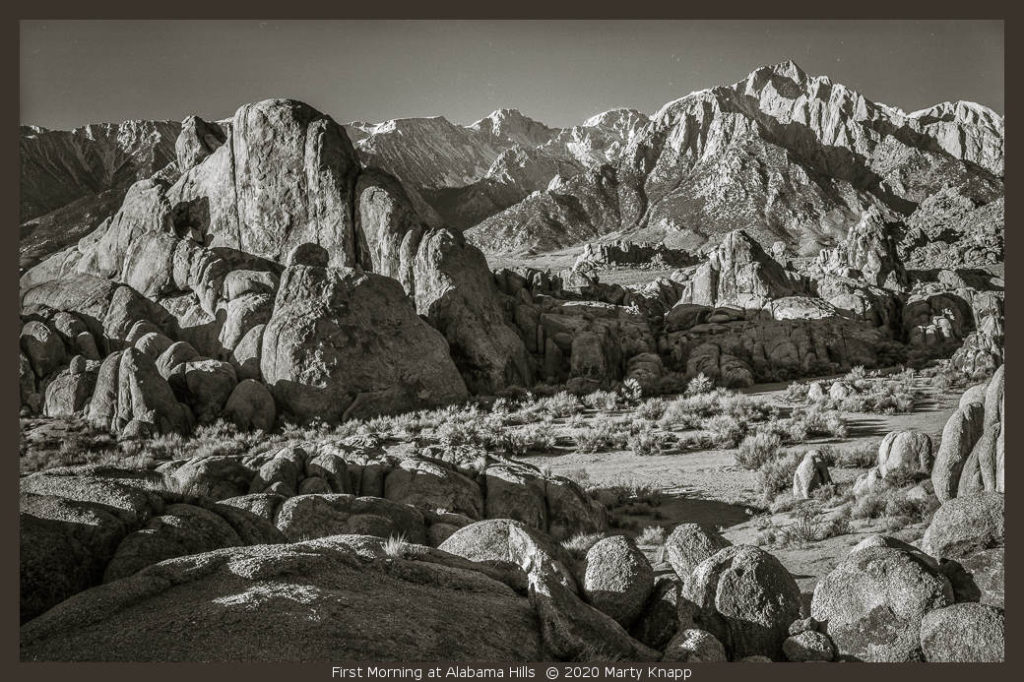
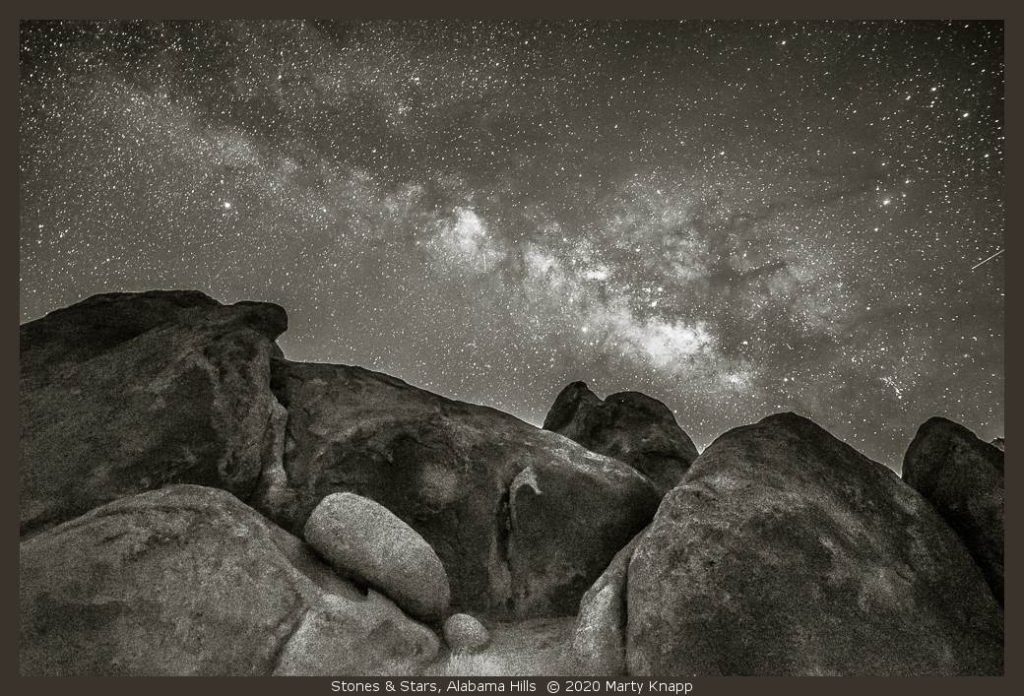
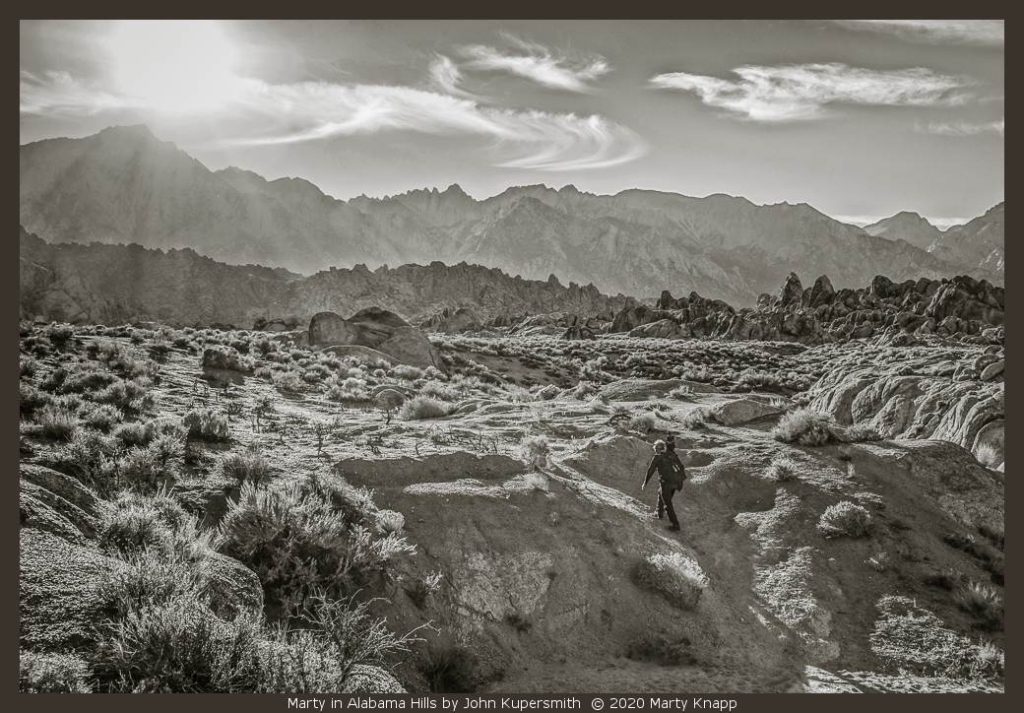
In the morning I awoke to an incredible sight. We were camped amidst a chaotic field of stones and rocks as far as the eye could see. In the distance the morning sun was lighting up the jagged eastern peaks of the Sierra mountains. On that first brief morning visit, I had not yet gotten my bearings, but I managed one photograph which I call First Morning, Alabama Hills. Later, as we pulled out to continue our journey, I vowed to return and spend time exploring and photographing this wonderland of boulders. And return I did, many times over the years. Most recently, I went there in 2018 to photograph the night sky with my friend Hadley Johnson.

So, now, I’ve gradually created a body of work that I’ve found worthy of showing you. The photographs are parsed out into two galleries on this website:
Alabama Hills Vistas, which includes some overall views, and
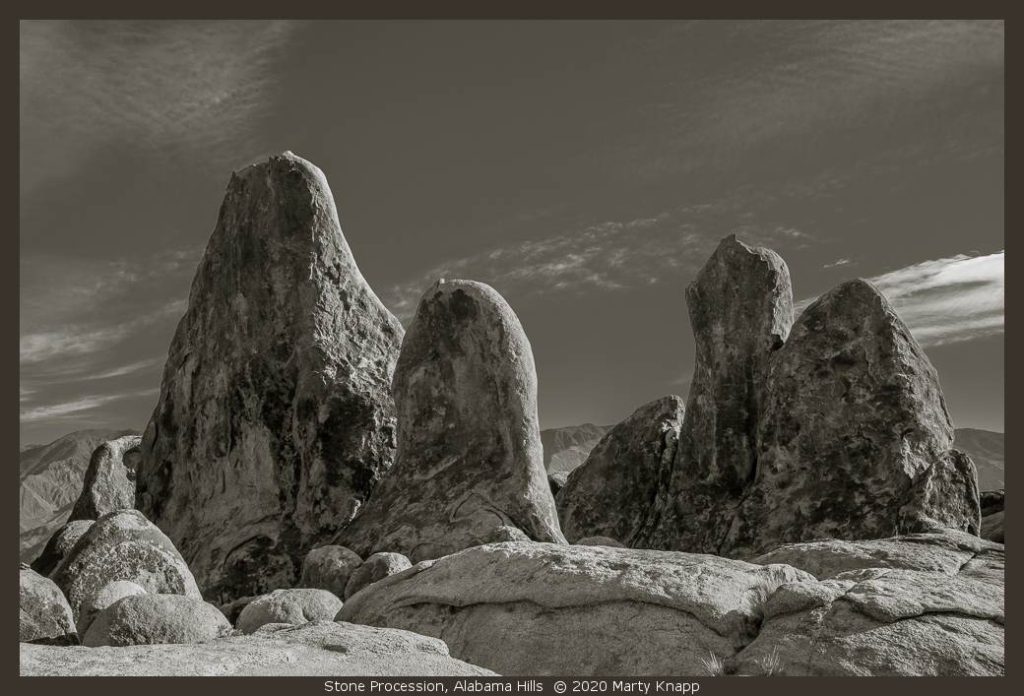
Alabama Hills Stones, a collection of my favorite stone photographs made there.

I hope you enjoy the views and the stones. Your comments are welcome and will be published as I receive them.

End Piece: The Alabama Hills are not in Alabama
The story goes that the Alabama Hills were named after a Confederate warship in the Civil War by prospectors who were sympathetic to the Confederate cause. I think there may be a little more to the story. Here’s my version: As night falls in this rock-strewn landscape, some miners are sitting around a campfire. Mix in some moonshine drinking and the fading light transforming ghostly shapes on the horizon and you have the recipe for heightened imagination. As the drinking continues and the scene darkens, one of the men looks out and notices a particular rock formation that, for him, resembles the famed warship. “Hey, Boots, don’t that thar rock pile look like the Alabama?”
If I ever find that pile of rocks, I’ll photograph it and let you know!